
ISME20 – Empowering global workforce development in microbiome data analysis and governance
Roundtable Discussion – ISME20, Auckland NZ
Rules of Engagement
Be collaborative, present, respective, and constructive. Please make space for one another. Everyone’s contributions have value. We will create and maintain a culture of mutual respect. We recognize that people bring diverse life histories and experiences.
This session will be free from harassment of any sort, including verbal and written language and imagery, targeting an individual or group of individuals. Anyone who does not adhere to this agreement or the ISME20 Code of Conduct, will be asked to leave and reported.
Panelists
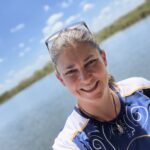 Dr. Alejandra Prieto-Davó
Dr. Prieto-Davó is a Professor at the Faculty of Chemistry of the National Autonomous University of Mexico in Sisal with 20 years of teaching experience, focusing on undergraduate and graduate level. As an oceanographer, her research focuses on marine microbial ecology and the discovery of natural products from microbial communities of ocean sediments and cenotes in Yucatán.
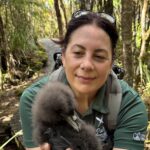 Dr. Amanda Black
Dr. Black is a Professor in the Department of Soil & Environmental Sciences at Lincoln University, New Zealand with 15 years of teaching experience, focusing on post graduate and early career researchers. Her research currently focuses on understanding the relationship between gene expression and soil productivity; and biosecurity and climate change issues concerning Maori and indigenous communities. She is also the director of Bioprotection Aotearoa, national center of research excellence (CoRE) comprising 11 partner organisations across New Zealand and Fiji.
Dr. Andrew Bissett
Dr. Bissett leads the Marine Observations and Analytics in Commonwealth Scientific and Industrial Research Organisation’s Sustainable Marine Futures program. His training experience includes creating opportunities for early career researchers to up-skill in microbiome data analysis and collecting reusable data. His research utilises metagenomics analysis tools to improve understanding of microbial biodiversity patterns and dynamics and their effects on ecosystem processes in a range of environments, alongside interests in data and metadata management and standards.
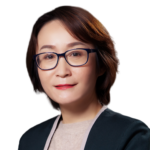 Dr. Fengping Wang
Dr. Wang is a Professor in the School of Oceanography at Shanghai Jiao Tong University with over 20 years of teaching experience, focusing on undergraduate, graduate and postdoc level. She recently organized several international training workshops for early-career scientists. Her research focuses on deep-sea and benthic ecosystems, such as microbial carbon metabolism in marine sediment environments, geochemical element cycling by deep-sea benthic organisms, and acquiring and evaluating hard-to-culture archaeal resources in the deep sea.
Dr. Luis Gabriel Wall
Dr. Wall is a Professor in the Centre for Biochemistry and Microbiology of Soils at the University of Quilmes with 42 years of teaching experience, focusing on undergraduate, graduate (PhD) and postdoc level. His research focuses on soil health biochemical indexes and harnessing soil and plant microbiomes for sustainable agriculture, working in close interaction with farmers.
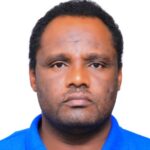 Dr. Mesfin Tafesse Gemeda
Dr. Gemeda is an Associate Professor at Addis Ababa Science and Technology University with 18 years of teaching experience, focusing on advising MSc and PhD level graduate students. His research areas include studies of microbial enzymes, metabolites, bioactive compounds, and biomaterials using culture, sequence- and function-based metagenomics.
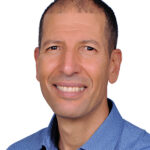 Dr. Mohamed Hijri
Dr. Hijri is a Professor in the Department of Biological Sciences at the Université de Montréal, Canada, and Director of the African Genome Center at the University Mohammed VI Polytechnic (UM6P), Morocco. He has over 20 years of teaching and mentoring experience at the undergraduate, graduate, and postdoctoral levels. His research focuses on microbial ecology, arbuscular mycorrhizal fungi, soil and plant microbiomes, microbial genomics, and microbiome engineering for sustainable agriculture and environmental resilience. Through his leadership at the African Genome Center, he is actively advancing genomics and microbiome research capacity across Africa by developing state-of-the-art infrastructure, fostering international collaborations, and training the next generation of scientists.
Facilitators
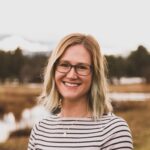 Dr. Ellen Dow
Dr. Dow is a Program Manager at Lawrence Berkeley National Laboratory with over 10 years of teaching experience, focusing on undergraduate biology education and early career / faculty computational biology. She leads the KBase Educators Program at US DOE Systems Biology Knowledgebase and is co-PI for NSF RCN-UBE MICROnet – Microbiomes In Computational Research Opportunities Network.
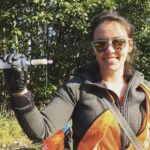 Dr. Mikayla Borton
Dr. Borton is an Assistant Professor in the Food Science and Nutrition Department at Colorado State University with 4 years of teaching experience with focus on microbiome methods, microbial metabolism, and the translation of sequencing data into real-world application. She is also a co-director of the Colorado State Microbiome (CoSMic) Network that fosters collaboration and training across disciplines.
Resources
To be added after the Roundtable Session.
