
Community Highlight: Elizabeth McDaniel
Elizabeth McDaniel (EM) is a computational biologist at Microcosm Foods working on making the benefits of fermented foods accessible to everyone through research and open datasets. Microcosm Foods is setting out to understand the health benefits of fermented foods and sharing their work as a public resource. One of their focuses is to build a representative microbial genome database of fermented foods to survey collected fermented food samples with ease and reproducibility. The genome Narrative available in KBase shares a strain-level representative set of fermented food microbial genomes, which was constructed to profile the microbial composition of any fermented food they collected as part of their survey efforts.
Update: A pre-print associated with this work was made available on bioRxiv on March 5, 2026. Read it here: Leveraging publicly available datasets and machine learning approaches for predicting the health benefits of fermented foods
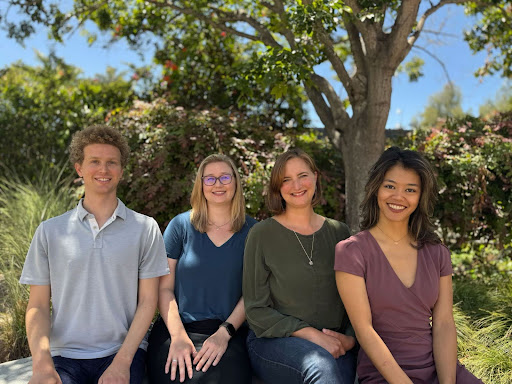
The Microcosm Foods team (from left to right): Matthew Schertler, Elizabeth McDaniel, Rachel Dutton, Chantle Edillor
How has using KBase supported your work?
(EM) I have been an active member of the KBase community since 2018 when I attended a KBase workshop at the JGI Users Meeting. I have used KBase for metabolic modeling of genomes, helping students learn how to QC and assign taxonomy to assembled genomes, and exploring different datasets. KBase now supports our work at Microcosm Foods by making our open science mission effortless and accessible to the research and education community. By sharing curated genome sets on KBase, we didn’t have to spend our own time creating webtools and could instead plug into the great infrastructure and tools through KBase that researchers and users already love and know how to use.
Can you share one “behind the scenes” thing about your work?
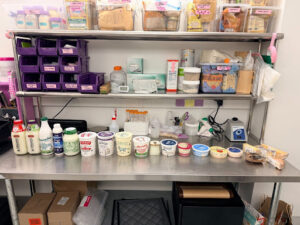
A selection of fermented foods represented in the database
(EM) One new and exciting part of my “behind the scenes” work is learning about and tasting different and diverse fermented foods. Before working on the Microcosm Foods project, I had considered myself somewhat familiar with fermented foods, mostly cheese, wine, yogurt, sauerkraut etc. However as I started to curate metadata for existing public resources and our own fermented foods collections, I found my fermented foods experience was extremely limited. After joining the Microcosm Foods team and embarking on this project, I’ve had the chance to taste and really explore so many fermented foods and associated recipes. Some new staples in my fridge and pantry are kimchi and gochujang – a fermented chili paste. My favorite discoveries so far have been idli and dosa (made with fermented black gram and rice). This food exploration has made my job go beyond the computer to exploring new flavors and culinary traditions.
What role do you see KBase having in open science principles?
(EM) I really see KBase’s role in open science key for sharing large datasets and enabling others to run different analyses on these datasets. Not everybody has access to large compute clusters or has the expertise in complex computational workflows. KBase allows users to intuitively create narratives of widgets and public datasets to answer new questions in an accessible way.
References and Links
- Microcosm Foods website: https://microcosmfoods.com/
- Fermented Foods Microbial Genomes Database Narrative: https://doi.org/10.25982/218406.47/2569606
- Fermented Foods pre-print: Leveraging publicly available datasets and machine learning approaches for predicting the health benefits of fermented foods
