Training in the Mountain West, a new MICROnet Hub
Biology and Microbiology instructors gathered May 19-21 for a training workshop at Colorado State University (CSU) Spur Campus in Denver, CO as part of NSF RCN-UBE* MICROnet [# 2418285]. One of MICROnet’s primary goals is facilitating in-person training for undergraduate faculty and educators, where they can discuss teaching and research goals, build out collaborative projects, and develop their regional MICROnet hub. This year, MICROnet co-hosted the regional training workshop with the Colorado State Microbiome Network (CoSMic) to establish a hub in the Mountain West.
*National Science Foundation Research Coordination Network for Undergraduate Biology Education
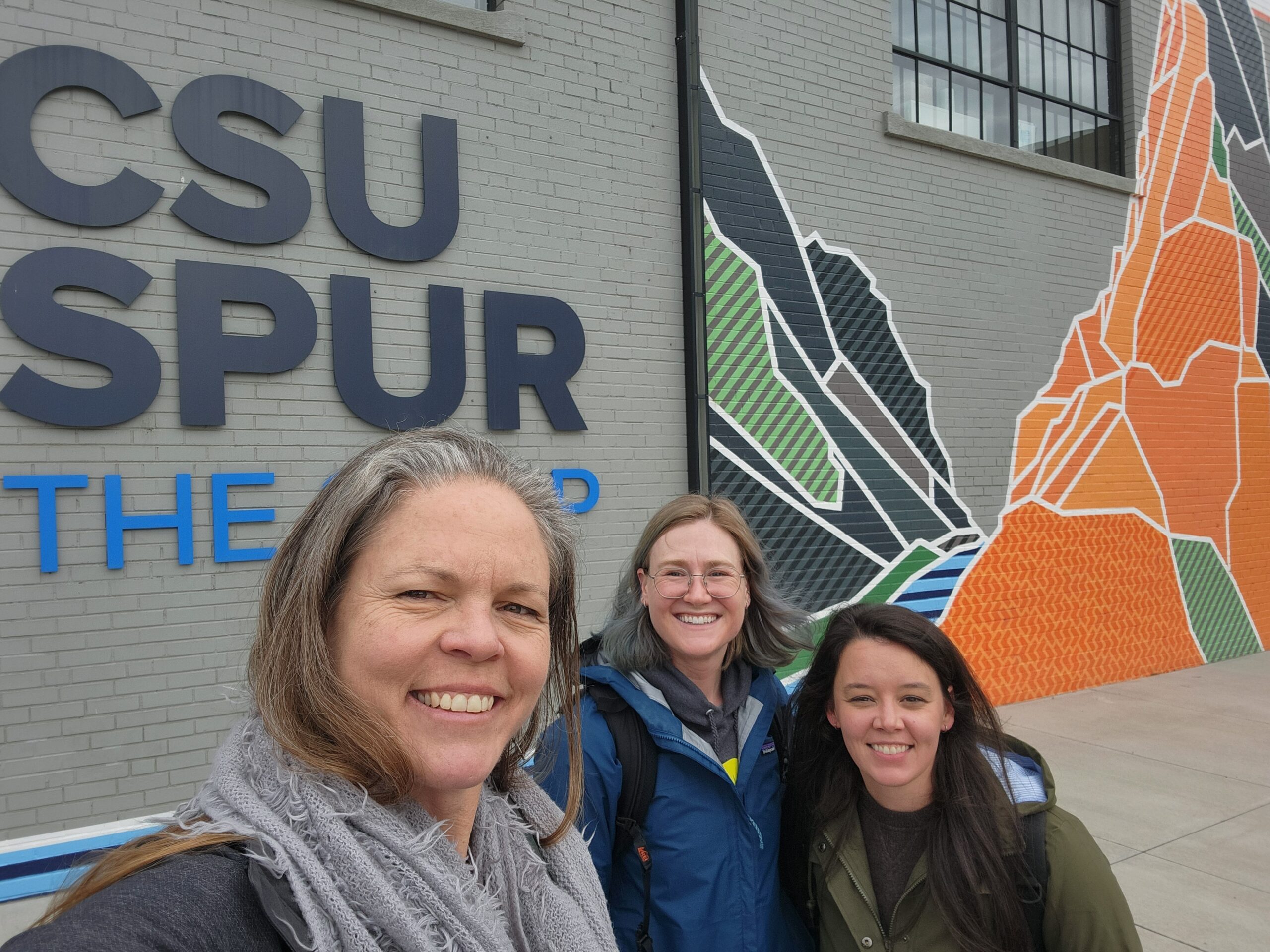
MICROnet co-PIs Elisha Wood-Charlson and Ellen Dow with CoSMic member and CSU Assistant Professor Mikayla Borton at CSU Spur. Photo courtesy of Elisha Wood-Charlson.
What is MICROnet?
Microbiomes In Computational Research Opportunities Network (MICROnet) was established to train the next generation of microbiome researchers in the process of scientific investigation and instill bioinformatics skills that will better prepare them for the workforce and next steps in their careers. This program builds on the RCN-UBE KBase Educators Incubator [# 2316244] that developed a modularized program for training undergraduate students in microbiome research skills, while also generating findable, accessible, interoperable, and reusable (FAIR) data and sharing it openly with the research community via the KBase platform. Read more about the program development (https://www.kbase.us/news/educator-workshop-jan2024/) and establishing the NE Hub (https://www.kbase.us/news/micronet-jun-2025/).
Access to modules and resources: https://www.kbase.us/engage/microbiome-training/
Training Workshop
Twenty-eight participants from the greater Mountain West (Arizona, Colorado, New Mexico, Nebraska, Utah) came together for the second MICROnet regional workshop. This year emphasized leveraging collaborations to enable large-scale projects and sampling efforts. In addition to co-hosting the workshop with CoSMic, educators were introduced to large-scale sampling projects, such as the National Ecological Observatory Network (NEON) and Worldwide Hydrobiogeochemistry Observation Network for Dynamic River Systems (WHONDRS).
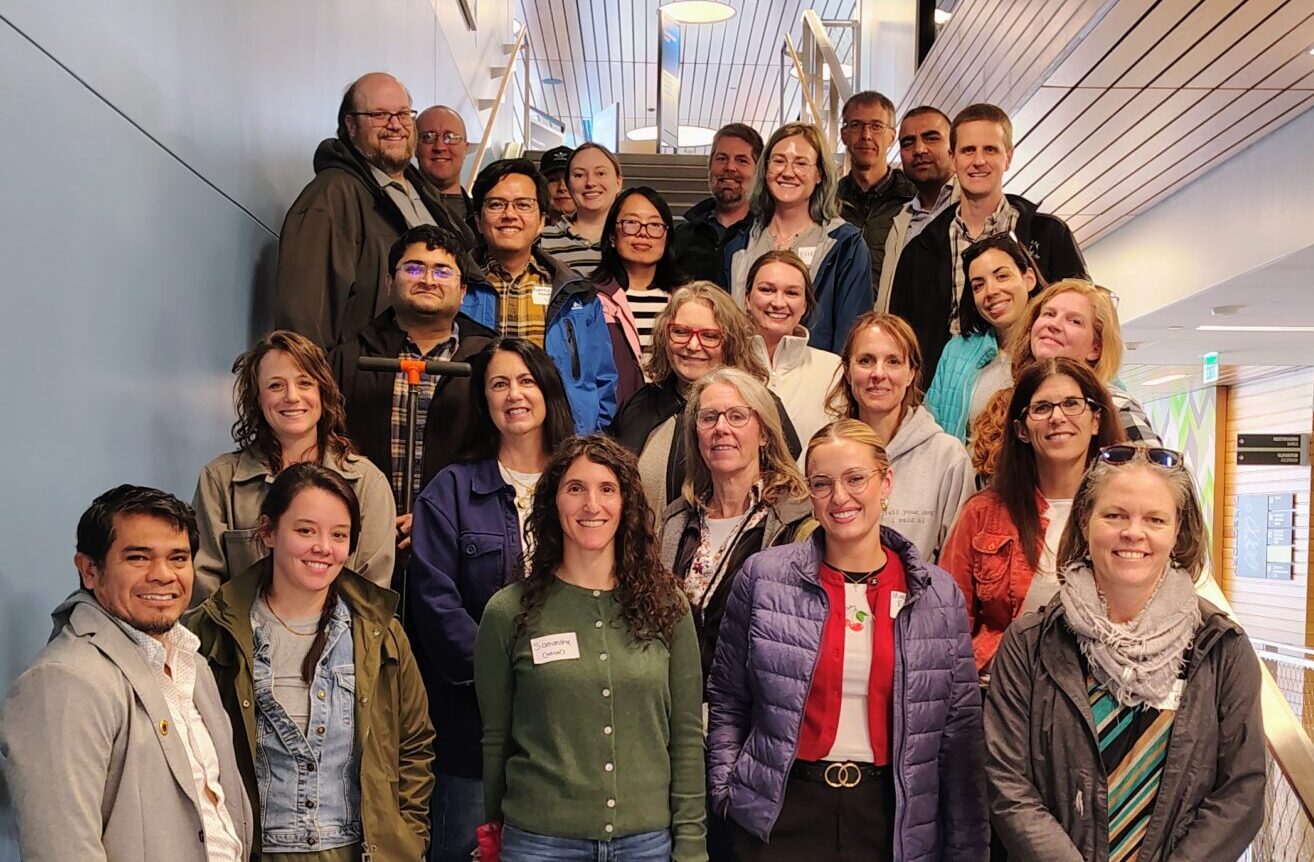
Workshop participants and instructors at CSU Spur in Denver, CO. Photo courtesy of Debarshi Dasgupta. Top back row (left to right) Matthew Crook, Hillary Eaton, Raegan Paul, Jeff Shaver, Chris Miller, Fifth row: David Merriam, Peipei Zhang, Ellen Dow, Khaista Rahman, J. Jordan Steel Fourth row: Dominikus Atmaka, Valerie Seitz, Nicole Caimi Third row: Debarshi Dasgupta, Karrie Weber, Dana Kirkwood-Watts, Jessica Metcalf, Second row: Laura Mason, Nia Bauer, Maureen Morrow, Annika Mosier Front row: Hinsby Cadillo-Quiroz, Mikayla Boron, Samantha Weintraub-Leff, Macy Ricketts, Elisha Wood-Charlson
Instructors from MICROnet, CSU, and the NEON led training sessions focused on sample collection and processing protocols and best practices for publishing with students. Educators received an orientation to the modular resources and MICROnet, took part in discussions on developing place-based question(s), running effective experimental designs and logistics, and best practices for publishing data with their students. Each of the MICROnet modules emphasize the FAIR data principles, especially including metadata related to environmental samples, sample processing, and connecting samples to data to publications and other research products.

Samantha Weintraub-Leff (NEON) provides an overview of NEON and their standardized soil sampling methods.
Participants took an active role in discussing their research questions and goals and how to integrate students’ questions into their courses across four microbiome environments: built, host-associated, water, and soil. Instructors went through standardized microbiome sample collection protocols for soil with Samantha Weintraub-Leff (NEON) and aquatic with Mikayla Borton (CSU) systems. They also had a chance to practice collecting and validating sample metadata with the National Microbiome Data Collaborative (NMDC) Sample Submission Portal to curate comparable and reusable data.
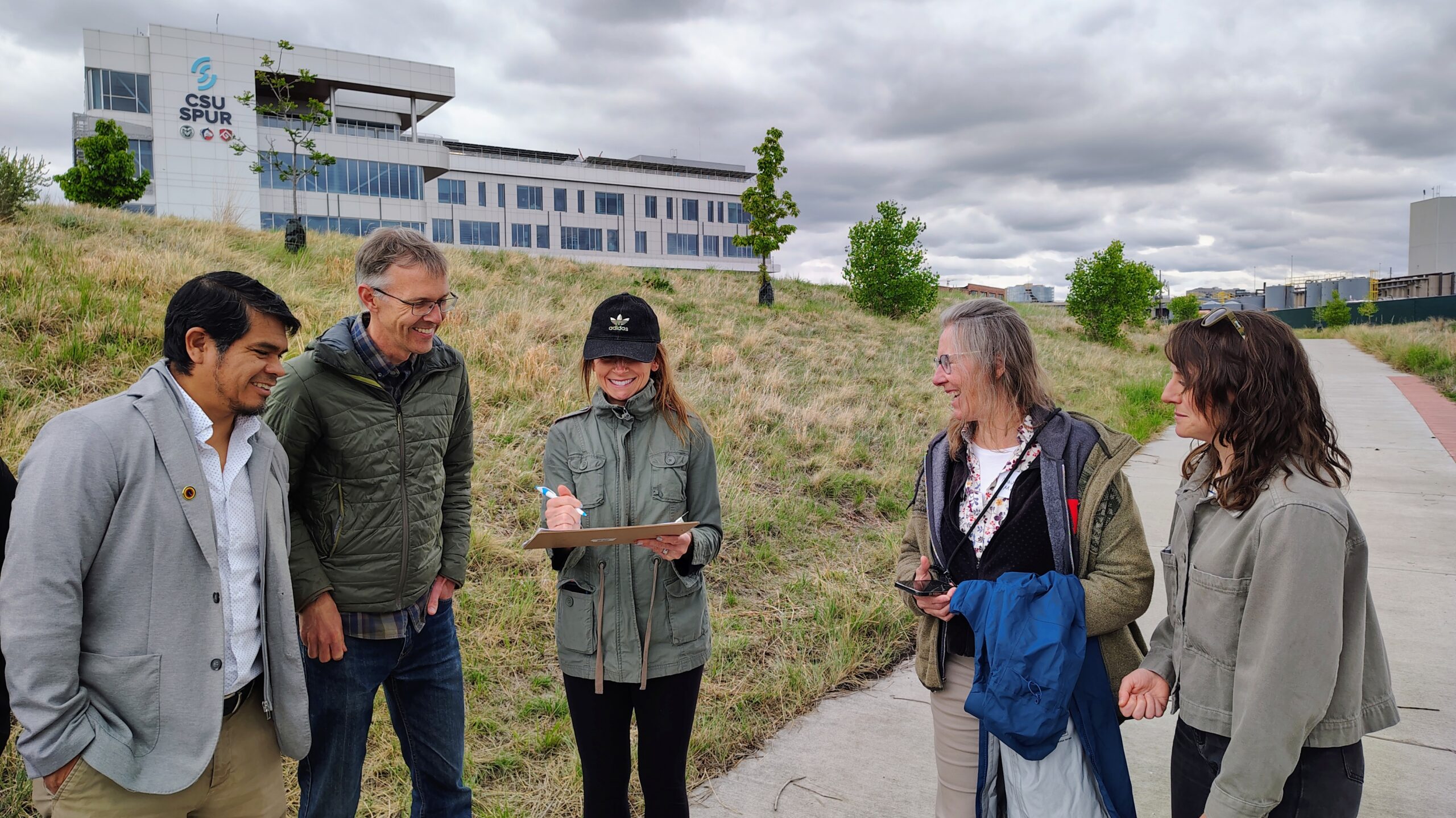
Educators at CSU Spur documenting environmental metadata along the South Platte River. Photo courtesy of Debarshi Dasgupta.
Conversation during the workshop often fell on course logistics, such as how to adapt materials to student needs and scale for the size of their courses. These discussions provided an opportunity for instructors to share their different approaches for integrating microbiome research and using materials.
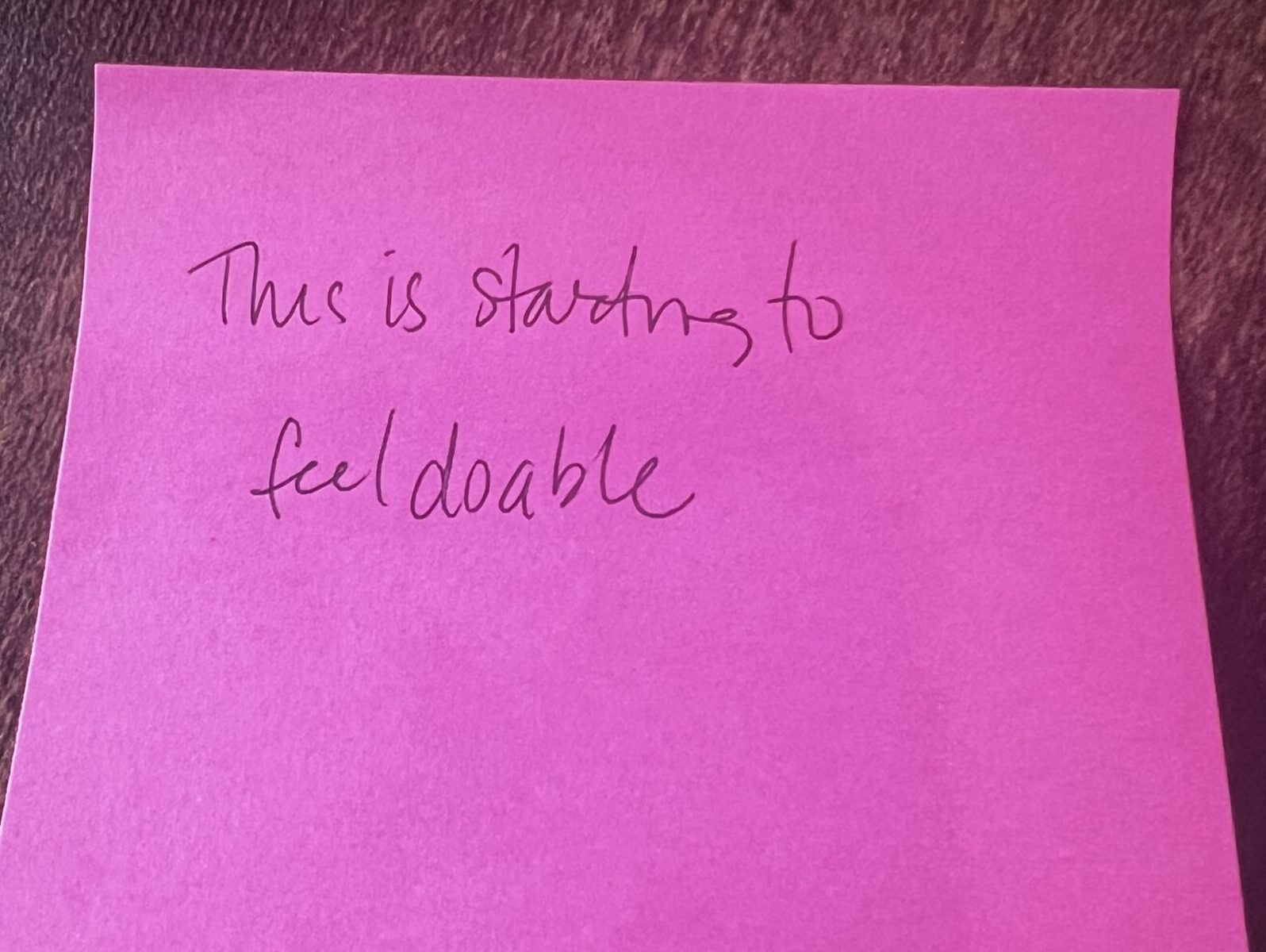
Anonymous participant feedback shared on a sticky-note during a workshop check-in.
Conclusions
Instructors are now preparing to integrate the modules in their courses in the 2026-27 academic year, and the MICROnet team is working to support their network logistics. The workshop was a great opportunity to connect instructors across the Mountain West alongside MICROnet collaborators (CoSMic, NEON) to establish the new regional network. The ability to host everyone in-person enabled more organic discussions and brought together a diverse group of instructors that otherwise wouldn’t have overlapped at a more domain-focused research or teaching conference. Microbiome environment-specific break-outs led to instructors planning how their students can contribute to existing research questions and utilize existing datasets – especially resources from NEON and ensuring data is appropriately cited.
If you are an educator interested in using these modules, send an email to [email protected] for how to access open-source materials.
Want to support educators integrating microbiome research into their courses? Reach out to us at [email protected] so we can connect you with a local MICROnet Hub.
References & Links
Funding:
National Science Foundation Research Coordination Network for Undergraduate Biology Education: Microbiomes in Computational Research Opportunities Network (MICROnet) [# 2418285] https://www.nsf.gov/awardsearch/showAward?AWD_ID=2418285&HistoricalAwards=false
National Science Foundation Research Coordination Network for Undergraduate Biology Education Incubator: KBase Educators: Program for Microbiome Workforce Development [# 2316244] https://www.nsf.gov/awardsearch/showAward?AWD_ID=2316244&HistoricalAwards=false
Colorado State University Vice President for Research Office Interdisciplinary Scholarship Award https://www.research.colostate.edu/interdisciplinary-scholarship-awards/
Collaborators and Programs:
Colorado State Microbiome Network – CoSMic: https://microbiomenetwork.colostate.edu/
KBase Educators (bioinformatics and data science): https://www.kbase.us/engage/educators/
Microbiomes in Computational Research Opportunities Network – MICROnet: https://www.kbase.us/engage/microbiome-training/
National Ecological Observatory Network – NEON (fully funded by the National Science Foundation): https://www.neonscience.org/